 This week I want to talk about crash pads for skaters. Pads can be very beneficial for skaters learning new jumps that require many repetitions and falls to master. I usually have my skaters get pads when they are learning their axel. If they’re falling a lot on another single jump, I might recommend crash pads earlier.
Since the axel jump is 1½ rotations in the air, it takes more time and practice to master than the previous jumps. Also, the longer the rotation, the more height and rotation speed required. This causes falls on jumps like the axel and above to have more force with the skater possibly getting a bruise or another injury.
Even if the falls aren’t that hard, just falling many times in a row can cause muscle soreness or bruising. Another advantage of pads is that they usually give the skater an extra boost of confidence that makes the jump easier because the skater isn’t as afraid of falling.
There are various crash pads for skaters, including pants you can buy with pads sewn in already. My favorite individual pads are made by Waxel Pad. They’re a foam material that’s available in ½-inch, ¾-inch or 1-inch thickness. Waxel Pads have small, medium, and large sizes available, but the medium size in a ½-inch or ¾-inch thickness works best for most skaters. You can buy the hip or butt pads separately, although I recommend just getting the set of three with both hip pads and the butt pad.
Happy skating! 🙂



 Skate Towel – This can be any type of rag or towel. I like micro fiber. Each time you take your skates off, you need to use the towel to dry the blades and the bottom and sides of the boot where it’s wet. If you don’t dry the blade, it might rust and corrode. The boot could warp on the bottom if it stays wet too long.
  Soft Soakers – These are only for putting on your blades after you dry your blades with a towel. The purpose of soakers is to protect the blades when storing and to help absorb any small amounts of moisture on the blades. However, if you don’t dry the blades before you put soakers on your skates, the soakers will just absorb the moisture and keep your blades damp, causing rust. Also, never walk in soakers because they offer almost no protection for walking. You could create nicks in your blades and make holes in the soakers.
  Hard Guards – These are for putting on your blades when you are walking in your skates off ice. They help protect your blades from rocks and other small things that may cause nicks in your blades when you walk over them. Never leave your hard guards on overnight or when you take your skates off. The guards hold water and your blades will rust. Also, make sure you remember to take the guards off before you step on the ice. I have seen many falls from skaters forgetting to take off their guards.
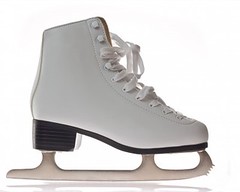
 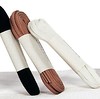 Laces – All skates come with laces. However, some laces are too long for the skates. If you have to wrap the laces around the top of the boot, you need shorter laces. Wrapping the laces around the top of the boot will break the boot down faster and could cause an ankle injury as well. New laces are inexpensive. I recommend going with a mixed-blend lace. Mixed blend means the lace is a poly/cotton blend. Laces that are 100% nylon are harder on your fingers and can sometimes loosen up while skating. Laces that are 100% cotton stick in the boot holes because they are thicker. But it’s really up to your personal preference.
 Gloves – A thin glove is always a good idea if your hands get cold easily. Gloves also make it less painful when you fall. You can usually find a variety of skating gloves online or at skate shops.
  Pads – If you fall on the same spot consistently when learning a jump, I would recommend pads. There are gel pads or foam pads you can put in your leggings to help cushion any falls while mastering jumps. Skate shops and online stores should have a variety of options.
